
Generative AI forecasts personalized trajectories of aging phenotypes
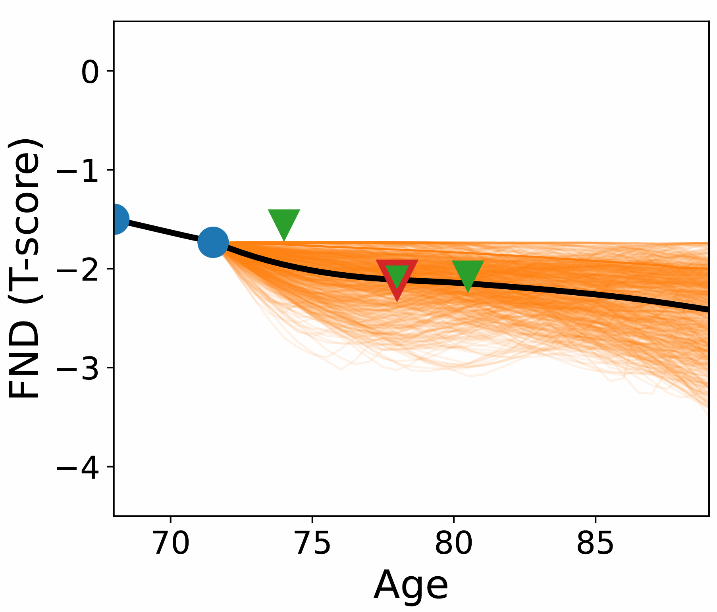
With a general increase in human lifespan, healthy aging has assumed great importance. We developed a novel AI technology, DyViA-GAN, for Dynamic Views of Aging with conditional Generative Adversarial Networks. DyViA-GAN can predict plausible personalized trajectories of an aging phenotype conditioned on the available measurements of the phenotype at a few initial data points. Given the prevalence of osteoporosis in the aging population, DyViA-GAN predicted the progression of femoral neck Bone Mineral Density (BMD) of a healthy individual as she ages from 65 to 89 years. The work was published in Frontiers in Aging (Research Topic: Artificial Intelligence in Aging).
A mathematical model to aim for autoimmune diseases
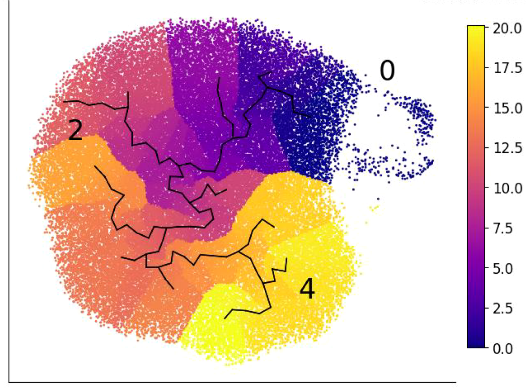
Neutrophils, the most abundant immune cells in the human circulation, play a central role in the innate immune system. We developed a mathematical model to describe the dynamics that characterizes the states and their transitions during the maturation of human neutrophils. We used single-cell gene expression data to identify five subtypes of healthy human neutrophils. We noted that precursor neutrophils transition into immature neutrophils, which then either transition to an interferon-responsive state, or continue to mature through two further states. It is a rare and novel model that can help in understanding the dynamics of autoimmune diseases such as lupus. The work was published in Frontiers in Immunology (Research Topic: Mathematical Modeling in Discovery and Analysis of Immune Responses).
Spatial transcriptomic profiling of tissue data
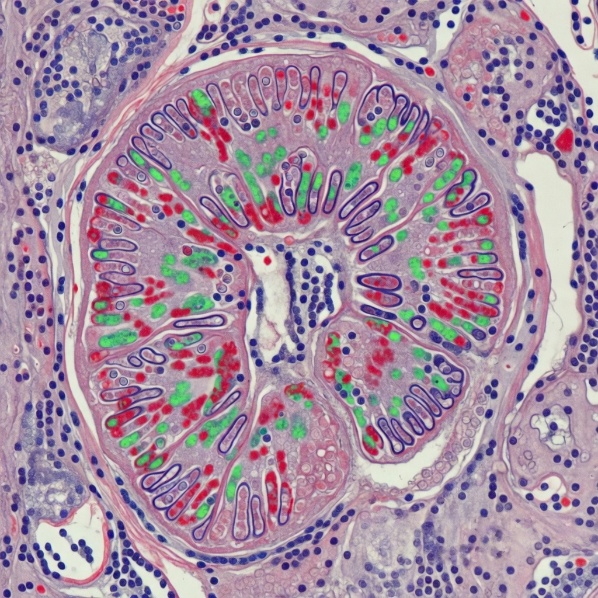
Lupus nephritis (LN) is a severe manifestation of lupus known for causing progressive kidney inflammation and tissue injury. Using a mouse model and our new statistical platform for tissue analysis, spatial transcriptomics on LN-affected kidneys revealed several types of cells with distinct expression profiles, including regions enriched for B cells and myeloid cells. Spatial molecular signature analysis identified inflammatory programs enriched for cytokine, chemokine, and interferon pathways. These insights into the stage-specific molecular programs and spatially organized immune niches in LN provide potential targets for early intervention. The work was published in the Journal of Immunology.
An automated platform for modeling of tissue molecular landscapes
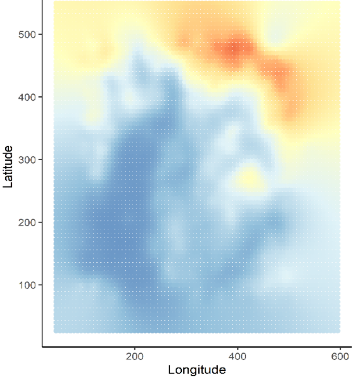
Spatial transcriptomics (ST) enables high-resolution molecular profiling while preserving tissue architecture, and provides opportunities to study spatially organized disease mechanisms. We developed an integrative platform to produce a cohesive model of the spatially varying pathway–pathway and pathway-phenotype interactions across tissue locations in 3-dimensions. It has broad applications for investigating spatiotemporal disease processes in autoimmune disorders, cancer, and neurodegenerative diseases.
The work will be presented at the QBI Workshop on Multiplex Image Analysis & Computational Pathology will be held at the La Jolla Institute for Immunology, San Diego, CA.
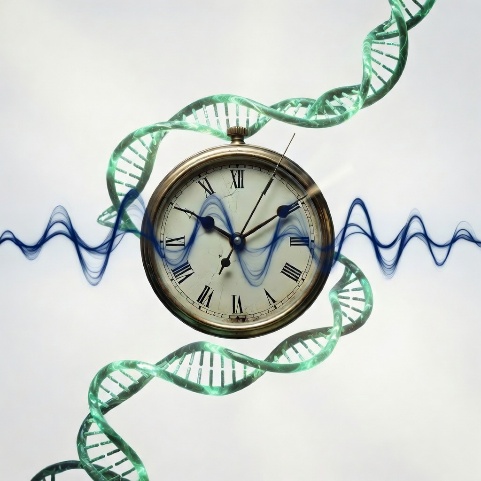
Circular functions represent expressions of circadian genes
Circadian rhythms are among the key oscillatory functions that rhythmically coordinate many biological processes in living organisms. To dissect the molecular signatures of these processes, we developed a computational platform, CIrcular FUnctions (CIFU). CIFU represented gene expression time-course profiles as flexibly shaped curves, did temporal alignment of such curves based on Fisher-Rao distance, and produced clustering of the similar curves. Our analysis of transcriptomic data from skin samples collected over the course of multiple days and nights identified clusters of genes that exhibit similar patterns of circadian expression peaking at different phases over a 24-hour period. The work was published, in honor of C.R. Rao, in Sankhya B.